El Niño rains trigger vast Atacama Desert bloom
Winter rain and rare snow awakened dormant seeds across northern Chile, producing a flowering event visible from space.
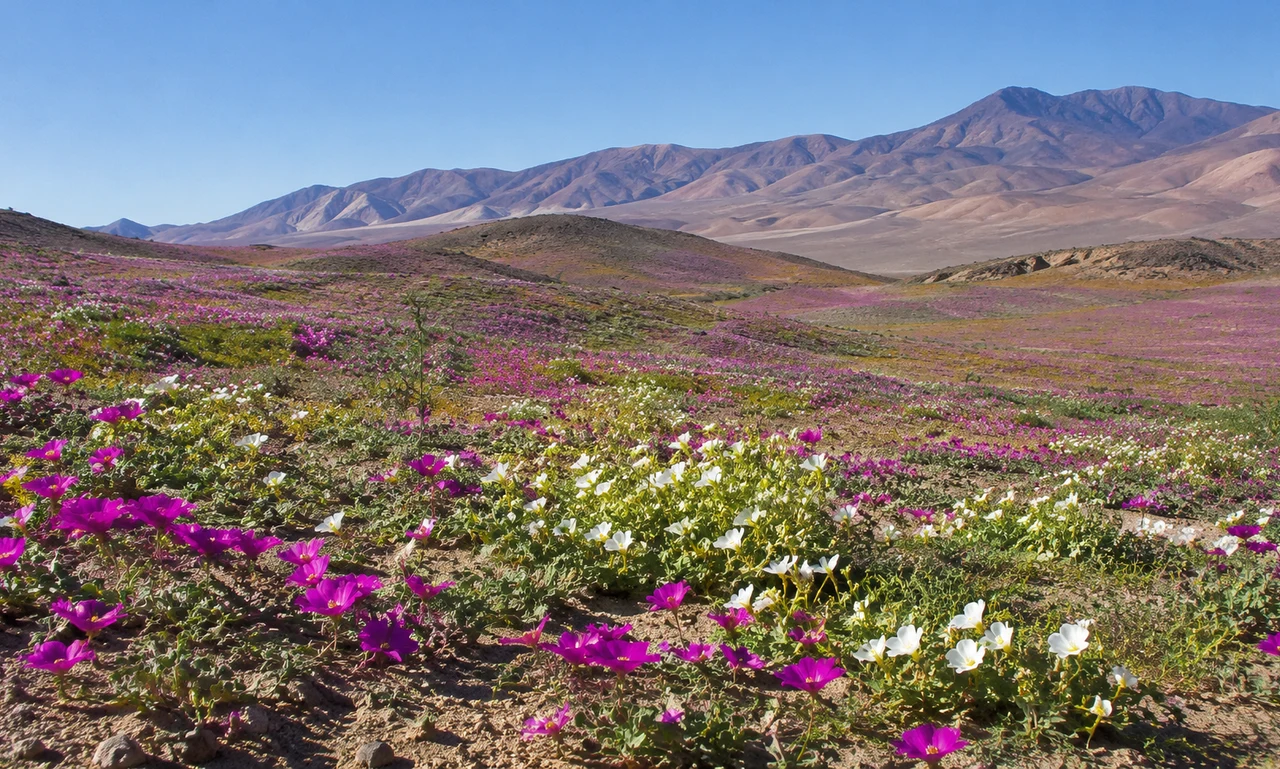
Parts of Chile’s Atacama Desert have turned red-purple, green and white after an unusually wet winter awakened seeds that had remained dormant in the soil.
NASA Earth Observatory says the event may be the most extensive flowering desert observed during the satellite era. The bloom followed one of Chile’s heaviest July rain events in decades and rare snow across parts of the desert in August.
The rain arrived as El Niño strengthened in the tropical Pacific. Changes in atmospheric pressure helped shift the Southern Hemisphere storm track north, while several fronts carried moisture into normally dry areas.
Landsat 8 captured the region on September 14, and Landsat 9 recorded the same area on October 24. The later image shows broad patches of red-purple flowers about 30 kilometres southwest of Copiapó, near Desierto Florido National Park.
Researchers have identified 13 major Atacama blooms between 1981 and 2015 using NASA’s long-term vegetation record. The timing and extent vary because flowering depends on rain, temperature and the survival of dormant seeds.
Source
News brief based on the linked NASA Earth Observatory report.